

Replacement cost coverage generally pays to repair or replace covered property with something of similar kind and quality, without subtracting for depreciation. Actual cash value coverage generally accounts for depreciation, which can leave you paying more of the replacement bill yourself.
There is another difference worth understanding right away: replacement cost coverage does not necessarily mean the insurance company sends the entire replacement amount in its first payment. You may receive a depreciated payment first, with additional money available after you meet the policy’s repair or replacement requirements.
I think this distinction deserves attention before comparing insurance prices. A lower premium is easier to evaluate when you also understand what the policy could leave you paying after a covered loss.
This explanation focuses on home insurance. Your policy’s terms, endorsements, limits, and deductible determine how an actual claim is handled.
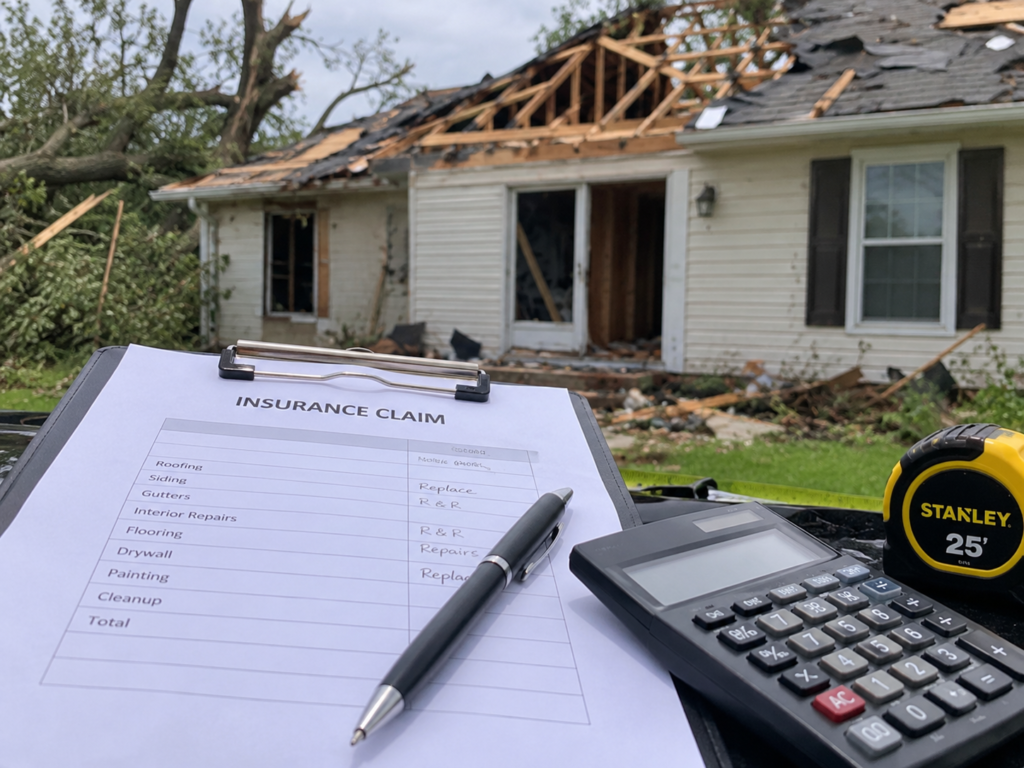
What Is the Difference Between Replacement Cost and Actual Cash Value?
| Policy term | General meaning | What it can mean for you |
|---|---|---|
| Replacement cost | Cost to repair or replace covered property with similar kind and quality, without a deduction for depreciation | More of the eligible replacement expense may be covered, subject to policy requirements |
| Actual cash value | Value of covered property at the time of loss, commonly calculated as replacement cost minus depreciation | You may need to cover both the deductible and the difference caused by depreciation |
The National Association of Insurance Commissioners explains this distinction in its comparison of actual cash value and replacement cost coverage. Neither settlement method removes the deductible or guarantees that every expense is covered.
Before comparing two quotes, ask your licensed agent or insurer to identify the settlement method for the house, the roof, and your belongings separately. One answer may not apply to all three.
What Does Depreciation Mean in an Insurance Claim?
Depreciation is a reduction in value associated with factors such as age, condition, use, and wear.
An older item may still work perfectly well. That does not necessarily mean its insurance value equals the cost of buying a comparable new one.
There is no single depreciation percentage that applies to every item or every policy. A roof, couch, and computer may be evaluated differently.
Travelers’ explanation of a property claim estimate shows how its estimates account for age, expected life, condition, and obsolescence. That illustrates one insurer’s process, rather than establishing a calculation every company must use.
If depreciation appears on your claim estimate, ask which property it applies to and how the amount was calculated. Incorrect information about an item’s age or condition is something to bring to the claim representative’s attention.

A Hypothetical $10,000 Example
For this simplified example, assume:
- A covered event damages property that is eligible for the settlement method being compared.
- The accepted cost to repair or replace that property with similar kind and quality is $10,000.
- The insurer calculates $3,000 in depreciation.
- The applicable deductible is $1,000.
- The coverage limit is sufficient, and no other restriction reduces payment.
- Under the replacement cost option, the owner completes eligible work costing $10,000 and meets all requirements to recover the depreciation.
| Calculation | Actual cash value coverage | Replacement cost coverage after requirements are met |
|---|---|---|
| Accepted repair or replacement cost | $10,000 | $10,000 |
| Depreciation deducted from final eligible amount | $3,000 | $0 |
| Deductible | $1,000 | $1,000 |
| Total illustrated insurance payment | $6,000 | $9,000 |
| Owner’s share of the $10,000 expense | $4,000 | $1,000 |
With actual cash value coverage, the simplified calculation is:
$10,000 − $3,000 depreciation − $1,000 deductible = $6,000.
With replacement cost coverage, the illustrated total after qualifying repairs or replacement is:
$10,000 − $1,000 deductible = $9,000.
These numbers explain the distinction. They are not a prediction of a real claim payment.
Why Replacement Cost May Be Paid in Stages
Using the same example, a replacement cost claim could begin with $6,000, representing the actual cash value amount after the deductible.
The remaining $3,000 could be paid later if the policy allows recovery of that depreciation and the owner satisfies its requirements. The illustrated total would then reach $9,000.
The Missouri Department of Insurance discusses this general payment process in its guidance on supplemental claims and recovery. Payment timing and replacement cost deadlines need to be checked in the particular policy.
That timing can create a practical cash problem. A contractor’s bill or replacement purchase may come due before the additional insurance payment arrives.
Ask the claim representative what documentation is needed, when additional payment can be requested, and how the process works before committing to work you cannot afford to fund.
What Is Recoverable Depreciation?
Recoverable depreciation is depreciation withheld from an initial settlement that may become payable after qualifying repair or replacement.
The word recoverable matters. It identifies money that may be available under the policy, rather than money automatically owed immediately.
Common requirements include completing eligible repairs or replacement and supplying receipts, invoices, or other evidence. The policy can also set notice and completion deadlines.
Travelers explains in its guide to depreciation reimbursement that spending less than the estimated replacement cost can reduce the additional reimbursement. Its procedures apply to its claims and should not be assumed to match another insurer’s policy.
You May Not Receive Every Dollar Shown as Recoverable
In our $10,000 example, the later $3,000 payment assumes the owner completes eligible work costing the full accepted amount.
If the owner spends less, replaces only some damaged property, or chooses not to replace it, the additional payment may be lower or unavailable under the policy.
Buying a more expensive upgrade also does not automatically increase what the insurer owes.
Ask for the applicable deadline in writing. Do not assume a deadline mentioned online applies to your claim.
Your Deductible and Coverage Limit Still Matter
Replacement cost describes a settlement method. It does not remove the amount you are responsible for paying or eliminate the policy’s payment limits.
The Deductible Is Your Share of the Covered Loss
The deductible is the portion of a covered loss you bear under the applicable policy terms.
In our hypothetical staged payment, the $1,000 deductible is already reflected in the initial $6,000 payment. It is not subtracted a second time from the later $3,000.
Home policies can have different deductibles for different causes of loss. Some are fixed dollar amounts, while others are percentages. The percentage may be based on the dwelling coverage limit, rather than the amount of damage.
Travelers’ overview of homeowners deductibles and limits explains those distinctions. Check the actual deductible that applies to the loss you are discussing.
The Limit Can Restrict Payment Even With Replacement Cost
A replacement cost provision does not necessarily allow payment above the applicable coverage limit.
Also check for requirements about maintaining a specified amount of insurance relative to the home’s replacement cost. Failing to meet those requirements can affect settlement under some policies.
The NAIC’s homeowners insurance information discusses the relationship between replacement value and the amount of insurance carried. Ask your insurer how your policy handles that requirement instead of assuming a percentage applies universally.
The House, Roof, and Belongings Can Have Different Terms
“Replacement cost coverage” is an incomplete answer if it does not identify which property receives that treatment.
The House
Dwelling coverage generally concerns the home’s structure. Its settlement provisions may provide replacement cost treatment when the policy’s conditions are satisfied.
The amount needed to rebuild is different from the home’s sale price. Market value includes factors such as land and the real estate market. Rebuilding cost concerns reconstructing the home.
Travelers’ explanation of estimated home replacement cost describes that difference and why renovations or changing construction costs can affect the estimate.
The Roof
Roof coverage deserves a separate question, particularly when comparing wind and hail protection.
A policy may provide replacement cost treatment for much of the dwelling while an endorsement changes how certain roof losses are settled. Possible terms include actual cash value or a payment schedule tied to roof characteristics.
Missouri’s roof insurance coverage resource explains several settlement methods and emphasizes that the policy and endorsements determine coverage. Use it to identify questions, then verify the terms of your own policy.
Replacement cost coverage also does not turn an aging roof into a covered claim. Missouri’s homeowners insurance FAQsdistinguish covered roof damage from ordinary wear or lack of maintenance.
Your Belongings
Personal property coverage concerns belongings such as furniture, clothing, and electronics.
Do not assume that replacement cost coverage for the house also provides replacement cost coverage for its contents. A separate endorsement may be needed.
Personal property can also have special limits for particular items or types of loss. Replacement cost treatment does not erase those limits.
Travelers’ personal property coverage explanation describes both settlement options and notes that certain possessions can have lower limits than the overall contents limit.
Replacement Cost Is Different From Guaranteed Replacement Cost
| Coverage term | What it generally addresses |
|---|---|
| Replacement cost | Repair or replacement without a deduction for depreciation, subject to applicable limits and conditions |
| Extended replacement cost | An additional specified amount above the dwelling limit for eligible rebuilding expenses |
| Guaranteed replacement cost | Eligible rebuilding expenses even when they exceed the stated dwelling limit, subject to the coverage’s conditions |
Ordinary replacement cost coverage is not a promise of unlimited rebuilding money.
The NAIC’s consumer guide to home insurance identifies guaranteed replacement cost as additional coverage and separately discusses endorsements for belongings and building code expenses.
Even guaranteed replacement cost can have requirements. For example, Erie’s published explanation includes conditions about reporting improvements and limitations on costs associated with laws or ordinances. That is an illustration of product conditions, not a recommendation of an insurer or a statement that the product is available everywhere.
Where to Find the Settlement Terms in Your Policy
Start with the declarations page, but read beyond it.
The declarations summarize coverage amounts, deductibles, and other policy information. The detailed settlement terms and changes may appear elsewhere.
Look for:
- Dwelling coverage, often labeled Coverage A.
- Personal property coverage, often labeled Coverage C.
- Loss Settlement provisions.
- Replacement Cost or Actual Cash Value wording.
- Roof endorsements or payment schedules.
- Personal property replacement cost endorsements.
- Conditions and duties after a loss.
- Repair, replacement, and notice deadlines.
The NAIC’s guide to reading a homeowners or renters policy explains the declarations and endorsements. An endorsement can change a provision in the main policy, so read them together.
For an electronic policy, search for “depreciation,” “loss settlement,” “roof,” and “replacement.” Ask your licensed agent or insurer to point to the provision that answers your question.
Questions to Ask Your Licensed Agent or Insurer
I want this explanation to help you get a clearer answer about an actual policy. These questions are more useful than asking only whether it has replacement cost coverage.
- How are covered losses to my house settled?
- Does my roof have different terms, especially for wind or hail?
- Are my belongings covered at replacement cost or actual cash value?
- Which deductible applies, and how is a percentage deductible calculated?
- Can depreciation be recovered, and what must I do to receive it?
- What notice, repair, and replacement deadlines apply?
- What limits or special restrictions could reduce payment?
- Must I maintain a particular amount of dwelling insurance to receive replacement cost settlement?
- Does the policy include extended or guaranteed replacement cost, and under what conditions?
For an existing claim, also ask for an itemized estimate showing replacement cost, depreciation, the deductible, and any amount potentially recoverable.
If an explanation remains unclear, request the supporting policy language in writing. Missouri residents can also review the state’s insurance complaint assistance. The department can review compliance and help explain options, although it cannot determine the value of a disputed claim.