
No, Missouri is not a no-fault state for car insurance. Missouri uses an at-fault system, meaning responsibility for an accident matters when determining who owes damages.
Missouri also uses pure comparative fault. In plain English, more than one person can share responsibility, and your recovery of damages can be reduced by your share of fault.
But there is another piece worth understanding: your own insurance may still help after an accident, even when someone else caused it. That depends on which coverages you purchased and what the policy allows.
I think insurance explanations become much more useful when they get past the label. Knowing Missouri is “at fault” is a start. Knowing what that means for the repair bill, medical expenses, and the next phone call is what helps.
What Does “At Fault” Mean in Missouri?
An at-fault system connects legal responsibility for an accident with responsibility for the resulting damages.
If another driver is responsible for damaging your car or injuring you, you may have a claim against that driver. Their liability insurance may pay covered damages, subject to available limits and other applicable terms.
That does not mean payment happens immediately. The insurer may need to investigate responsibility, coverage, and the amount of the loss.
Progressive’s Missouri insurance information identifies Missouri as an at-fault state. The label describes the system, rather than guaranteeing how any individual claim will be resolved.
After an accident, ask your insurer which coverages on your own policy may apply while the other claim is being evaluated. Do not assume the only possible path is waiting for the other driver’s company.
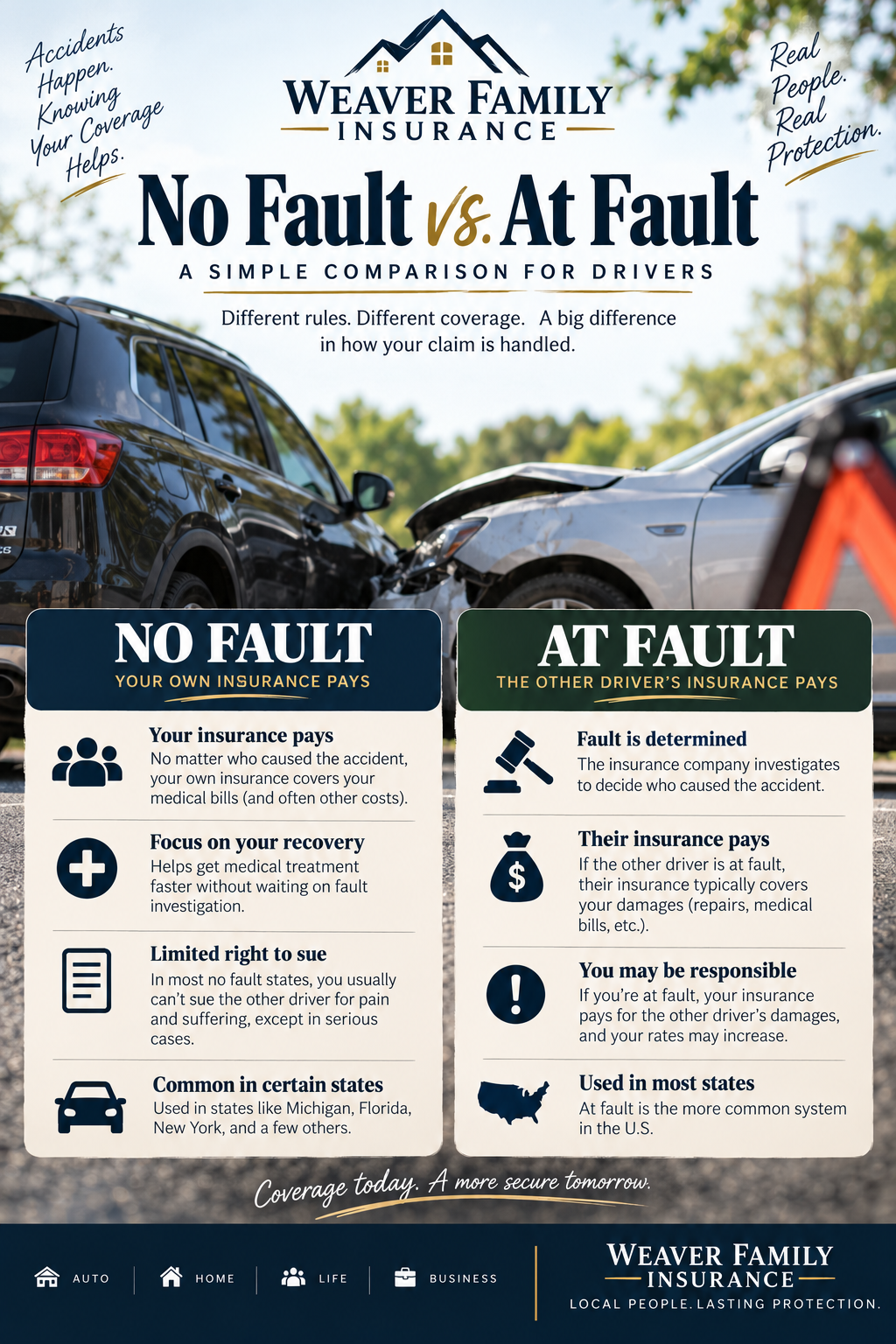
What Does “No Fault” Mean, Then?
“No fault” does not mean nobody caused the accident.
It generally refers to a system in which injured people turn first to their own personal injury protection, often called PIP, for certain covered injury expenses regardless of who caused the crash.
States using these systems have their own rules about benefits and when an injured person can pursue a liability claim or lawsuit.
Progressive’s explanation of no-fault insurance systems describes that distinction. Fault can still matter for vehicle damage and other claims in a no-fault state.
For this article, the important point is simple: Missouri does not use that general no-fault auto injury system.
Can Both Drivers Be Partly at Fault?
Yes. Missouri’s pure comparative fault approach allows responsibility to be divided.
Suppose, in a clearly hypothetical example:
- Your established damages are $10,000.
- You are assigned 20% of the fault.
- The other driver is assigned 80%.
- No other legal restriction, coverage issue, or payment limit changes the example.
Your share reduces the illustrated recovery:
$10,000 × 20% = $2,000 reduction.
$10,000 − $2,000 = $8,000 remaining damages.
That is an explanation of the percentage calculation, not a guaranteed insurance payment.
Missouri’s auto insurance FAQs explain that pure comparative fault reduces damages by the injured person’s percentage of responsibility. They also explain that insurers investigate and make settlement offers based on their assessment.
A fault percentage is something that must be supported by the facts. It is not automatically 50/50 because the drivers disagree.
Who Decides Which Driver Caused the Accident?
Insurers investigate the accident when evaluating claims.
They may consider driver accounts, witness statements, police reports, photographs, video, vehicle damage, and relevant traffic rules.
Progressive’s description of fault investigations identifies several of those sources. The evidence matters more than which driver speaks most confidently at the scene.
An insurer’s assessment is not the same as a final court judgment. If responsibility remains disputed, resolving the dispute may require legal assistance.
I would want a clear explanation rather than just being told a percentage. A useful question is:
“What evidence led to this fault assessment, and what information would you need to review it?”
Provide accurate facts. If you do not know a detail, say that instead of guessing.
Can You Use Your Own Collision Coverage if You Were Not at Fault?
Potentially, yes. Collision coverage generally addresses covered collision damage to your insured vehicle, regardless of who caused the accident.
That can provide another path to handling repairs while a claim against the other driver is being evaluated.
Your policy must actually include collision coverage for the vehicle involved. The deductible and other terms still apply.
Missouri’s guide to additional auto insurance coverages explains collision coverage separately from liability and notes that it generally includes a deductible.
Using Collision Coverage Does Not Mean You Admitted Fault
Requesting payment under a coverage you purchased is separate from accepting legal responsibility for the accident.
Ask the claim representative how the company will handle repairs, what deductible applies, and whether it will pursue recovery from the responsible party.
If you need help finding that coverage, my guide to what to check on your insurance declarations page explains where the limits and deductibles usually appear.
Will You Get the Deductible Back?
You may recover some or all of it, but reimbursement is not something to assume.
After paying a covered vehicle damage claim, your insurer may seek reimbursement from the responsible party or their insurer. This process is called subrogation.
Progressive’s subrogation explanation describes how successful recovery can help reimburse a deductible. The outcome and timing depend on the claim, applicable rules, and recovery available.
Ask your insurer how it handles deductible recovery and how you will receive updates. Do not budget around a refund that has not been confirmed.
Who Pays Medical Bills While Fault Is Being Investigated?
Medical expenses do not necessarily wait for an insurance settlement.
Depending on the coverage and circumstances, potential sources of payment may include:
- Optional medical payments coverage on your auto policy.
- Applicable health insurance.
- Uninsured motorist bodily injury coverage.
- A liability claim against a responsible driver.
These sources have different requirements. They are not interchangeable accounts that automatically pay the same bill.
Medical Payments Coverage Can Apply Regardless of Fault
Medical payments coverage, often called MedPay, may help pay eligible accident-related medical expenses for insured people, subject to its limits and terms.
Progressive’s medical payments coverage explanation describes benefits that can apply regardless of fault. That illustrates how this type of coverage works, rather than establishing every Missouri policy’s details.
Having MedPay does not make Missouri a no-fault state. A particular coverage can pay without requiring a fault decision even though the state’s liability system considers fault.
For actual bills, ask the insurers how benefits coordinate, what documents are needed, and whether reimbursement rights apply. Do not assume two coverages can pay you twice for the same expense.
What if the Other Driver Has No Insurance?
Being legally responsible does not mean a driver has insurance or money available to pay.
Missouri requires uninsured motorist bodily injury coverage on ordinary personal auto policies. That coverage can address qualifying injuries involving an uninsured driver, subject to the policy and law.
It is important to separate injury protection from car repair protection.
My guide to Missouri car insurance requirements and what the minimum covers explains the required uninsured motorist limits and why they do not automatically cover damage to your vehicle.
Collision coverage may provide a route for covered vehicle damage if you purchased it. Without applicable coverage, recovering repair costs can be more difficult.
Report the circumstances accurately and ask your insurer which coverage applies. Do not assume a hit-and-run claim or uninsured driver claim follows exactly the same process as every other accident.
What if the Other Insurer Says You Were Partly Responsible?
Start by requesting the explanation and identifying any missing or incorrect information.
Useful records may include:
- Photographs taken safely after the accident.
- Witness names and contact information.
- The police report or incident number.
- Relevant video.
- Repair estimates and related correspondence.
Keep copies of what you submit and a record of who you spoke with.
Missouri’s claim-filing guidance provides a starting point for communicating with the company and following its claim instructions. Ask what additional documentation is needed for the issue being reviewed.
What Can the Missouri Insurance Department Do?
The department can review insurance complaints, request an insurer’s response, and examine compliance with applicable requirements.
It cannot decide who was at fault, determine disputed facts, or act as your lawyer.
The state’s insurance complaint assistance page explains those boundaries. If you need advice about a disputed injury claim, settlement release, or lawsuit, consult an attorney.
What to Ask Your Insurer After a Missouri Accident
I want this information to help you have a more productive conversation, not leave you memorizing another insurance term.
Ask the claim representative:
- Which coverages on my policy may apply?
- Is the company still investigating fault or coverage?
- What information is missing?
- Can my collision coverage help with repairs?
- What deductible applies, and how is recovery handled?
- Do I have medical payments coverage?
- Is rental reimbursement included, and what are its limits?
- What is the next step, and when should I expect an update?
Knowing the claim number, representative’s name, and next requested action makes it easier to follow the process.
Other Questions About Missouri’s At-Fault System
Does “not my fault” mean I will have no out-of-pocket expenses?
No. You may initially face a deductible, expenses awaiting review, or costs that a particular coverage does not pay. Whether those amounts can later be recovered depends on responsibility, coverage, and the claim’s circumstances.
Does liability coverage repair my car if I caused the accident?
Your liability coverage generally concerns your responsibility for injuries or property damage to others. Damage to your own car needs to be evaluated under applicable vehicle damage coverage, such as collision.
Will reporting the accident make my premium go up?
There is no universal answer. Pricing can depend on the insurer, claim details, driving history, and applicable rules. Ask about the company’s practices, but do not ignore policy reporting obligations because you are worried about a possible increase.
What if I live in Missouri but the accident happens in another state?
Do not assume this Missouri explanation settles the issue. Another state’s law and your policy’s provisions may affect the claim. Give your insurer the accident location and ask which rules and coverages apply.
What if nobody has decided fault yet?
Ask which benefits can be evaluated now and which decisions are still pending. Your own collision or medical payments coverage may provide options, but the representative needs to confirm the coverage and requirements.
A clear status question is: “Are we waiting on fault, coverage, the repair estimate, or something else?” Those are different issues, and knowing which one is holding up the claim helps you understand what needs to happen next.